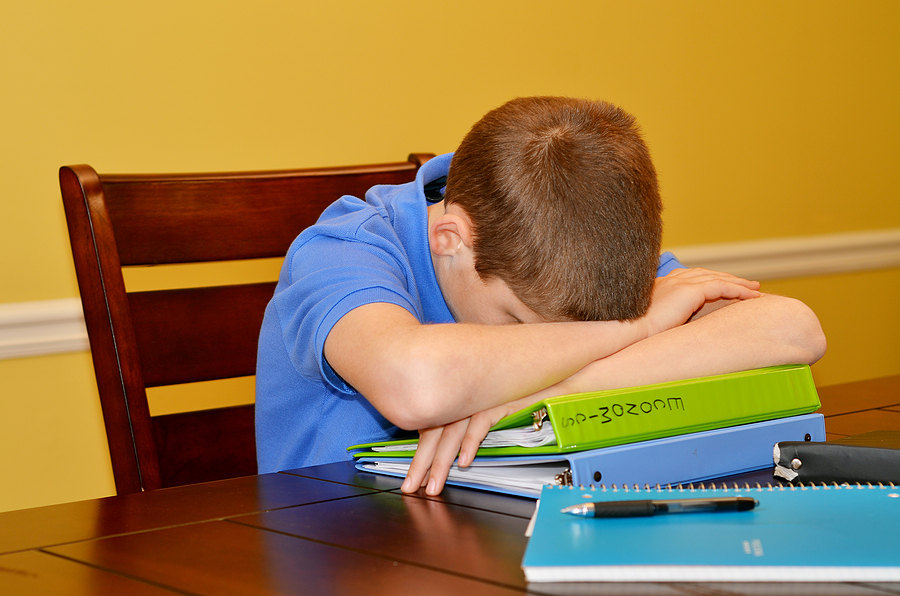
School has always come with pressure, but what teens are navigating today looks different from what most parents experienced growing up. The workload is heavier. The competition feels more intense. And the pressure to perform well starts earlier than ever. For a lot of teens, school is not just a place to learn. It is a place where they feel constantly evaluated, compared, and judged.
At Alis Behavioral Health, we work with teens to treat anxiety around many aspects of their lives, including schoolwork. School has become a major source of stress in most kids’ lives, and your child may just need some help coping with that stress. Here’s a deeper look at what you can do about your teen’s anxiety about schoolwork.
School Work Anxiety Often Stems From Little Things
Anxiety about school work often starts with something specific. A failed test. A teacher who is hard to please. A class that suddenly feels impossible to keep up with. But over time, those specific stressors can grow into something bigger. Your teen might start dreading school in general, not just a single subject or assignment. That shift, from situational stress to persistent dread, is worth paying attention to.
There is also the social layer. Teens are not just worried about grades. They are worried about what their grades say about them, whether they are smart enough. Whether they belong in the advanced class. Whether their friends are doing better. Academic anxiety and social anxiety are deeply connected for most teenagers, and it is hard to pull them apart.
How to Tell If Your Teen’s Stress Has Become Something More
Every teenager gets stressed about school. That is normal. A big exam coming up, a paper due at midnight, a week where everything seems to pile on at once. Stress in those moments is a reasonable response to real pressure. The question is whether the stress goes away when the pressure lifts, or whether it sticks around regardless of what is actually happening.
When stress becomes anxiety, it tends to lose its proportionality. Your teen might be panicking about an assignment that is not even graded. They might lie awake the night before a regular school day, not a test day. They might refuse to start homework because the fear of doing it wrong feels worse than not doing it at all. These are signs that something beyond normal stress is happening.
Watch for physical symptoms too. Stomachaches and headaches that show up on school mornings and disappear on weekends are not coincidences. Neither is trouble sleeping, loss of appetite, or frequent complaints of feeling sick. The body keeps score, and for anxious teens, the body often speaks before the words do.
What Happens in a Teen’s Brain During Academic Pressure
When your teen sits down to study and feels that wave of dread wash over them, that is not weakness or laziness. That is their nervous system doing exactly what it was designed to do, just at the wrong time.
The brain’s threat detection system, centered in the amygdala, does not distinguish between a lion in the grass and a math test on Friday. When your teen perceives a threat, whether physical or academic, the brain floods the body with stress hormones. Heart rate goes up. Muscles tighten.
The prefrontal cortex, the part of the brain responsible for focus, planning, and rational thinking, gets partially offline. This is why anxious teens often say they studied but blanked on the test. It is not that they did not know the material. It is that their brain was in survival mode, not learning mode.
For teens with anxiety disorders, this stress response gets triggered more easily and takes longer to calm down. The threshold is lower. The recovery is slower. And over time, the brain starts to associate school itself with that feeling of threat, which makes everything harder.
Signs That Your Teen May Need Professional Support
There is a difference between a teen who is stressed and a teen who is struggling in a way that needs clinical support. Both deserve compassion, but they do not always need the same response.
Some signs that your teen’s anxiety has crossed into territory where professional help would make a real difference: they are avoiding school regularly, either refusing to go or finding reasons to leave early. Their grades are dropping, not because they stopped caring, but because anxiety is getting in the way of their ability to function.
They are withdrawing from friends, activities, or things they used to enjoy. They are expressing hopelessness, saying things like “I’m never going to be good enough” or “What’s the point?” They are having panic attacks, crying spells, or emotional outbursts that seem out of proportion to what triggered them.
You might also notice that reassurance does not help. You tell your teen they are going to be fine, and they believe you for about five minutes before the worry comes back. That cycle, where reassurance provides only temporary relief, is a hallmark of anxiety disorders. It is a sign that the anxiety needs more than comfort. It needs treatment.
How to Talk to Your Teen About School Anxiety Without Making It Worse
The way you approach this conversation matters more than most parents realize. Teens who are already anxious are often also ashamed of their anxiety. They know their fear is not always rational. They know other kids seem to handle school fine. The last thing they need is a conversation that confirms their fear that something is wrong with them.
Start by listening more than you talk. Ask open questions. “What does it feel like when you sit down to do homework?” is more useful than “Why can’t you just get it done?”
Avoid minimizing what they are feeling, even if your intention is to reassure them. Saying “It’s not that big a deal” or “You’re going to be fine” can feel dismissive to a teen who is genuinely suffering.
And be honest with them. If you are worried, you can say so without catastrophizing. “I’ve noticed you seem really stressed lately, and I want to help figure out what’s going on” is a much better entry point than silence or frustration.
Practical Ways to Help Your Teen Manage Homework Stress at Home
The home environment plays a bigger part in academic anxiety than most parents expect. Some of what helps is structural. Some of it is relational.
On the structural side, consistent routines reduce anxiety. When your teen knows that homework happens at the same time each day, in the same space, with the same general rhythm, their nervous system has less to anticipate and dread. Unpredictability feeds anxiety. Predictability calms it.
Break tasks down. A teen who is staring at a three-page essay assignment and feeling paralyzed is not going to get unstuck by being told to “just start.” Help them identify the first small step. Open the document. Write one sentence. Find two sources. Small, concrete actions interrupt the freeze response that anxiety creates.
Limit the pressure you add at home. If your teen is already anxious about school, coming home to questions about grades and homework the moment they walk in the door adds fuel to the fire. Give them some decompression time before the academic conversation starts.
Sleep matters enormously. Anxiety and sleep deprivation feed each other in a vicious cycle. A teen who is not sleeping well will have a harder time managing stress, and a teen who is chronically stressed will have a harder time sleeping. Protecting sleep is one of the most concrete ways you can support your teen’s mental health.
When to Reach Out to a Mental Health Professional
If your teen’s anxiety about school is affecting their daily life, it is time to talk to someone. You do not need to wait until things reach a crisis point. In fact, the earlier you get support, the better the outcomes tend to be.
A good rule of thumb: if the anxiety has been going on for more than a few weeks, if it is showing up across multiple areas of your teen’s life, or if your teen is asking for help, those are all clear signals that professional support is warranted.
You do not need a diagnosis to reach out. You do not need to be certain that what your teen is experiencing is “bad enough.” If you are worried, that is enough reason to make a call. A mental health professional can help you figure out what is going on and what kind of support would be most helpful.
How Therapy Can Help Teens Cope With Academic Anxiety
Therapy gives teens something that reassurance from parents and teachers cannot: a structured, evidence-based set of tools for managing anxiety, delivered by someone trained to help them use those tools effectively.
Cognitive behavioral therapy, commonly called CBT, is one of the most well-researched approaches for anxiety in teenagers. It helps teens identify the thought patterns that are driving their anxiety, challenge those patterns, and replace them with more accurate and helpful ways of thinking. A teen who believes “If I fail this test, my life is ruined” can learn, through CBT, to examine that belief and find a more realistic perspective.
Therapy also helps teens build distress tolerance. Not every anxious feeling can be reasoned away. Sometimes the goal is not to eliminate the anxiety but to learn how to function despite it. That is a skill, and it can be taught.
For some teens, therapy works best alongside other supports, whether that is medication, school accommodations, or family therapy that helps parents and teens communicate more effectively. A good clinician will help you figure out which combination makes the most sense for your teen.
What Parents Can Do to Create a Low-Stress Home Environment
Your teen spends a significant portion of their life at home, and the emotional climate of your home has a direct impact on their anxiety levels. This is not about blame. It is about opportunity.
Model how you handle your own stress. Teens are watching. If they see you managing pressure with calm and perspective, that teaches them something. If they see you catastrophizing or shutting down, that teaches them something, too.
Prioritize connection over performance. A teen who feels genuinely loved and accepted regardless of their grades is more resilient than one who feels their worth is tied to achievement. This does not mean you stop caring about school. It means your teen knows that your relationship with them is not conditional on their GPA.
Create space for rest and play. Anxiety thrives when there is no relief. Make sure your teen has time in their week that is genuinely unstructured, not scheduled, not productive, just theirs. That kind of rest is not a reward for finishing homework. It is a necessity for mental health.
And take care of yourself. Parenting an anxious teen is exhausting and often frightening. You cannot pour from an empty cup. Seeking your own support, whether from a therapist, a trusted friend, or a parent support group, is not a luxury. It is part of how you show up for your kid.
How Alis Behavioral Health Supports Teens Struggling With School Anxiety
At Alis Behavioral Health, we work specifically with teenagers, and we understand how much academic anxiety can take over a young person’s life. We have seen teens who stopped going to school entirely, teens who were making themselves physically sick from stress, and teens who had convinced themselves they were not smart enough to succeed. In almost every case, the problem was not a lack of ability. It was anxiety.
We offer individualized mental health care that meets teens where they are. Our clinicians are trained in evidence-based approaches for adolescent anxiety, and we work closely with families because we know that what happens at home matters just as much as what happens in a therapy session. Contact Alis Behavioral Health by calling (888) 528-3860 or using our online contact form. You do not need to have everything figured out before you call. That is what we are here for.